
Introduction
Benign prostatic enlargement (BPE) is a prevalent urological condition in aging males, and is a primary cause of lower urinary tract obstruction. The enlargement of the prostate is typically caused by benign prostatic hyperplasia (BPH), which is characterized by an overgrowth of prostate stromal and epithelial cells. Epidemiological data show that BPH becomes significantly more common with age, affecting about 70% of men over 60 and as many as 90% of men over 80.1 Although prostate size is a conventional anatomical measurement for assessing obstruction in patients with BPE, recent research suggests that total prostate volume (TPV) does not always correlate with the severity of obstruction in the lower urinary tract.2,3
An alternative anatomical factor with significant clinical impact is intravesical prostatic protrusion (IPP), which is the anatomical condition where prostate tissue projects into the bladder.4 First described by Chia et al., IPP is a result of median lobe growth that distorts urine flow at the bladder neck, leading to significant bladder outlet obstruction.5 Transabdominal ultrasound provides a non-invasive way to measure the degree of IPP.6,7
BPE is often linked to both obstructive and irritative lower urinary tract symptoms (LUTS).8,9 To accurately gauge the severity of these symptoms, clinicians commonly use the validated International Prostate Symptom Score (IPSS) questionnaire during initial consultations.10 In line with existing research, a study by Hamza et al. revealed a positive correlation between IPP and the IPSS, suggesting that IPP is a clinically significant indicator of LUTS severity.11
Materials and methods
Study design and patient population
A cross-sectional observational study was carried out at the Department of Urology at Dr. Wahidin Sudirohusodo General Hospital in Makassar, Indonesia, between July and September 2025. The study cohort consisted of 52 male patients, each of whom provided informed consent. Participants were required to be between 40 and 100 years old with a confirmed diagnosis of BPE. The study excluded patients with a history of BPH surgery, prostate cancer, or other specific conditions, including neurological disorders affecting the urinary tract, urinary tract infections, urinary tract stones, diabetes mellitus, and the use of 5-alpha reductase inhibitor drugs.
Data collection
Patient data, including demographics, age, sex, and diagnosis, were extracted from electronic medical records. The severity of LUTS was measured using the standardized IPSS, a validated questionnaire that assesses both obstructive (voiding) and irritative (storage) symptoms.5,7 Each of the seven symptom questions was scored from 0 to 5, and the total score was used to categorize symptom severity as mild (0-7), moderate (8-19), or severe (20-35). Quality of life (QoL) was evaluated with a distinct, single question (item 8) on the IPSS instrument, which asks how much a patient is bothered by their urinary symptoms, with a score from 0 (delighted) to 6 (terrible).
We utilized a Mindray® model DC-7 ultrasound machine with a 3.5-5.0 MHz curvilinear transducer to conduct all sonographic measurements. Consistent with standard protocols, participants had 100-200 mL of urine in their bladders for IPP measurement, and a full bladder for prostate volume estimation.3,6 To eliminate inter-observer and minimize intra-observer variability, a single investigator performed all examinations, taking each measurement three times. We defined IPP as the distance, in millimeters, from the tip of the prostate to the bladder base, as seen on a midline sagittal image, as illustrated in figure 1. IPP was then classified into three classifications: Grade 1 (< 5 mm), Grade 2 (5-10 mm), and Grade 3 (> 10 mm).3
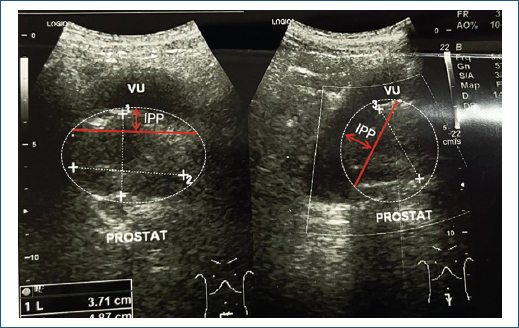
Figure 1. Measurement of intravesical prostatic protrusion shown by ultrasound.
Statistical analysis
We performed our data analysis using IBM Statistical Package for the Social Sciences Statistics, version 30. The Kolmogorov–Smirnov test was used to check for data normality. We reported continuous variables as mean ± standard deviation and ranges, with categorical variables described by their frequencies and proportions. To examine the relationships between variables, we applied Spearman’s correlation since the data were non-parametric. We interpreted the correlation coefficients as follows: r = 0-0.2 (very low), r = 0.2-0.4 (low), r = 0.4-0.6 (moderate), r = 0.6-0.8 (high), and r = 0.8-1.0 (excellent). To compare scores between the different IPP grades (1, 2, and 3), a Kruskal-Wallis test was employed, as it is a suitable non-parametric test for comparing three or more independent groups. Multiple Linear Regression was performed to determine the independent contribution of IPP, TPV, and age in predicting IPSS and QoL scores. For all analyses, a p ≤ 0.05 was established as the threshold for statistical significance with a 95% confidence interval.
Ethical considerations
The study protocol was reviewed and approved by the Health Research Ethics Committee of Hasanuddin University. As a prospective study utilizing informed consent, all data were handled in compliance with institutional and ethical standards to ensure patient confidentiality.
Results
Patient characteristics
A total of 52 men diagnosed with BPE participated in the study. Their ages ranged from 47 to 100 years, with an average age of 65.81 ± 9.36 years. The demographic distribution and clinical characteristics, including IPP grades and LUTS severity, are summarized in the tables below (Table 1).
Table 1. Demographic and clinical characteristics of patients (n = 52)
| Characteristics | Frequency | Percentage |
|---|---|---|
| Age (years) 40-49 50-59 60-69 70-79 > 80 | 2925133 | 3.817.348.125.05.8 |
| IPP Grades Grade 1 (< 5 mm) Grade 2 (5-10 mm) Grade 3 (> 10 mm) | 91825 | 17.334.648.1 |
| Symptoms Mild (0-7) Moderate (8-19) Severe (20-35) | 31633 | 5.830.863.5 |
|
IPP: intravesical prostatic protrusion. Percentages may not total 100 due to rounding. |
||
The demographic data showed that nearly half of the participants (48.1%, n = 25) were between 60 and 69 years old. The next most common age groups were 70-79 (25.0%, n = 13) and 50-59 (17.3%, n = 9). The participants’ clinical characteristics were categorized based on their IPP grade and IPSS. The most common IPP grade was Grade 3, found in 48.1% of patients, while Grade 2 was present in 34.6%, and Grade 1 in 17.3%. The majority of patients (63.5%) were assessed as having severe LUTS symptoms, with moderate symptoms in 30.8% and mild symptoms in 5.8%.
Correlation analysis
Spearman’s rank correlation was used to determine the relationships between anatomical measurements and clinical symptoms (Table 2).
Table 2. Correlation of IPP and TPV with clinical symptom scores
| Parameters | IPSS Total | IPSS Storage | IPSS Voiding | QoL |
|---|---|---|---|---|
| Age Spearman correlation (r) p | 0.306*0.027 | 0.2370.091 | 0.332*0.016 | 0.2290.103 |
| TPV Spearman correlation (r) p | 0.2560.067 | 0.1440.307 | 0.315*0.023 | 0.2170.123 |
| IPP Spearman correlation (r) p | 0.532**< 0.001 | 0.401**0.003 | 0.592**< 0.001 | 0.546**< 0.001 |
|
r: Spearman’s correlation coefficient. * Indicates a significant correlation at the 0.05 level (two-tailed). ** Indicates a highly significant correlation at the 0.01 level (two-tailed). IPP: intravesical prostatic protrusion; TPV: total prostatic volume; QoL: quality of life; IPSS: international prostate symptom score. |
||||
In terms of statistical relationships, Spearman’s rank correlation showed a significant positive association between age and both total prostate volume (TPV) (r = 0.345, p = 0.012) and the total IPSS score (r = 0.306, p = 0.027). A strong correlation was identified between IPP grade and the IPSS total score (r = 0.532, p < 0.001), the IPSS voiding score (r = 0.592, p < 0.001), the IPSS storage score (r = 0.401, p = 0.003), and the QoL score (r = 0.546, p < 0.001) (Table 2).
Interestingly, the analysis showed that TPV did not have a significant positive relationship with the total IPSS score (r = 0.256, p = 0.067). In contrast, a significant positive correlation was identified between TPV and IPP grade (r = 0.398, p = 0.003) (Table 3).
Table 3. Relationship between age, TPV, and IPP
| Parameters | r | p |
|---|---|---|
| Age – TPV | 0.345* | 0.012 |
| Age – IPP | 0.273 | 0.051 |
| TPV – IPP | 0.398** | 0.003 |
|
r: Spearman’s correlation coefficient. * Indicates a significant correlation at the 0.05 level (two-tailed). ** Indicates a highly significant correlation at the 0.01 level (two-tailed). IPP: intravesical prostatic protrusion; TPV: total prostatic volume. |
||
Comparison across IPP grades
To further evaluate the relationship between IPP grades and clinical parameters, we performed a Kruskal-Wallis test (Table 4).
Table 4. Comparison of clinical and ultrasound parameters by IPP grades
| Parameters | IPP Grade 1 (n = 9) | IPP Grade 2 (n = 18) | IPP Grade 3 (n = 25) | df | H | p |
|---|---|---|---|---|---|---|
| Age | 61.89 ± 6.73 | 66.33 ± 8.19 | 66.84 ± 10.8 | 2 | 3.884 | 0.143 |
| TPV | 37.62 ± 14.96 | 44.25 ± 25.91 | 52.07 ± 20.07 | 2 | 6.670 | 0.036 |
| IPSS Total | 10.89 ± 6.09 | 21.44 ± 6.44 | 24.52 ± 5.84 | 2 | 16.783 | < 0.001 |
| IPSS Storage | 5.44 ± 2.88 | 9.67 ± 2.91 | 10.56 ± 2.69 | 2 | 13.577 | 0.001 |
| IPSS Voiding | 5.44 ± 3.50 | 11.78 ± 4.32 | 13.96 ± 3.49 | 2 | 17.426 | < 0.001 |
| QoL | 1.89 ± 0.93 | 3.17 ± 0.86 | 3.84 ± 0.85 | 2 | 18.909 | < 0.001 |
|
H: Kruskal-Wallis test statistics; IPP: intravesical prostatic protrusion; TPV: total prostatic volume; QoL: quality of life; IPSS: international prostate symptom score. |
||||||
The test revealed a statistically significant difference in mean ranks across the IPP grades for several variables, including TPV (H = 6.670, p = 0.036), total IPSS score (H = 16.783, p < 0.001), IPSS storage score (H = 13.577, p = 0.001), IPSS voiding score (H = 17.426, p < 0.001), and QoL score (H = 18.909, p < 0.001). In addition, no significant relationship was found between IPP grade and age (H = 3.884, p = 0.143).
Independent predictors of symptoms
To determine the independent anatomical predictors of symptom severity, a multiple linear regression analysis was performed using IPSS and QoL scores as dependent variables, with IPP, TPV, and Age as independent predictors (Table 5).
Table 5. Multiple linear regression for IPSS and QoL
| Dependent variable | Independent predictor | B (unstandardized) | Beta (β) (standardized) | p |
|---|---|---|---|---|
| IPSS Total | IPP | 7.734 | 0.596 | < 0.001* |
| TPV | −0.003 | −0.007 | 0.953 | |
| Age | 0.096 | 0.117 | 0.333 | |
| QoL | IPP | 1.113 | 0.601 | < 0.001* |
| TPV | −0.004 | −0.071 | 0.573 | |
| Age | 0.009 | 0.074 | 0.550 | |
|
* IPP was the only independent predictor of severity of LUTS and patient’s well-being. IPP: intravesical prostatic protrusion; IPSS: international prostate symptom score; QoL: quality of life; TPV: total prostatic volume. |
||||
The regression model for IPSS was statistically significant (F[3,48] = 10.977, p < 0.001). Within this model, IPP was the only significant independent predictor (β = 0.596, p < 0.001), with an unstandardized coefficient (B) of 7.734. This suggests that for every unit increase in IPP, the Total IPSS score increases by 7.734 points, holding TPV and Age constant. Conversely, TPV (B = –0.003, p = 0.953) and age (B = 0.096, p = 0.333) did not significantly predict the Total IPSS score.
The model predicting QoL score was also statistically significant (F[3,48] = 9.224, p < 0.001). Similar to the IPSS model, IPP was the sole significant independent predictor (β = 0.601, p < 0.001), with a B coefficient of 1.113. This indicates that an increase in IPP is independently associated with a 1.113 unit increase in the QoL score (worse QoL), while TPV (B = −0.004, p = 0.573) and age (B = 0.009, p = 0.550) were not significant predictors.
Discussion
This study demonstrates that IPP is a better clinical predictor of LUTS severity and QoL compared to total prostatic volume (TPV). This finding supports the growing body of urological research on this topic.
IPP as a superior clinical predictor of LUTS
The strong positive correlations observed between IPP and both the total IPSS score (r = 0.532, p < 0.001) and its sub-scores, particularly IPSS Voiding (r = 0.592, p < 0.001), provide robust support for the “ball-valve” theory of obstruction. This mechanism, which describes the physical impedance of urine flow due to the inward protrusion of prostate tissue, directly explains the high correlation with voiding symptoms like weak stream, intermittency, and straining, and the significant worsening of LUTS and QoL observed across the increasing IPP grades (Kruskal-Wallis p < 0.001 for all scores). These findings are consistent with recent studies by Hamza et al.11 and Kim et al.,12 which similarly found that increased IPP is directly associated with worsening LUTS. This is also supported by the work of Boulma et al.13
Crucially, the Multiple Linear Regression analysis confirmed IPP’s dominance. When controlling for TPV and Age, IPP remained the only significant independent predictor for both Total IPSS (B = 7.734, p < 0.001) and QoL (B = 1.113, p < 0.001). This statistically confirms that the anatomical configuration IPP is the critical determinant of symptom severity, not the overall glandular size (TPV).
The inadequacy of total prostatic volume (TPV)
A critical finding of this study is the statistical insignificance of TPV as a predictor of patient symptoms. The low correlation between TPV and total IPSS (r = 0.256, p = 0.067) challenges the traditional reliance on overall prostate size as the primary indicator of LUTS severity.
This inadequacy is confirmed by the Multiple Linear Regression analysis. TPV showed virtually no predictive power in either adjusted model (p = 0.953 and p = 0.573, respectively). This definitely proves that the direction of prostatic growth (IPP), rather than the total glandular size (TPV), is the key anatomical determinant of clinical symptoms and patient distress. This result aligns with the conclusion of Hou et al.2 and implies that reliance solely on TPV may lead to misdiagnosis and inappropriate management.
The impact on QoL and clinical practice
The strong correlation observed between IPP and QoL (r = 0.546, p < 0.001), together with the strong correlations between IPSS Storage symptoms and QoL (r = 0.873, p < 0.001) and between IPSS Voiding symptoms and QoL (r = 0.886, p < 0.001), further highlights the close relationship between symptom severity and patients’ perceived quality of life. These findings suggest that both storage and voiding symptoms contribute substantially to the overall impact of lower urinary tract symptoms on patients’ quality of life. The Kruskal-Wallis test results further confirm this, showing that QoL progressively worsens with increasing IPP grade. Given that IPP is a simple and non-invasive measurement using transabdominal ultrasound, our findings suggest it could serve as a practical prognostic tool for predicting both symptom severity and the need for future intervention, as supported by Wang et al.3 and a meta-analysis by Tan et al.6.
Study limitations
This study has some limitations that should be noted. First, the sample size is relatively small, with only 52 participants. Second, the cross-sectional design means we can only show correlations, not a long-term cause-and-effect relationship. Furthermore, while a single investigator performed all sonographic measurements to eliminate inter-observer variability, the study did not formally evaluate the reproducibility of the transabdominal ultrasound measurements through a separate intra-observer reliability analysis. Future research with larger, multi-center longitudinal cohorts and rigorous reliability testing is recommended to further validate these anatomical predictors.
Conclusions
This study demonstrates that IPP is a more clinically relevant predictor of LUTS severity and QoL than total prostatic volume (TPV). Our findings confirm a significant positive correlation between IPP grade and both the total IPSS score and its voiding sub-score, highlighting the direct link between the anatomical extent of prostatic protrusion and the severity of a patient’s symptoms. The strong correlation with QoL underscores that IPP not only causes physical symptoms but also significantly impacts a patient’s well-being.
The lack of a significant correlation between TPV and total IPSS is a crucial finding that challenges the traditional reliance on prostate size alone. It reinforces that the internal growth pattern is a more critical factor in BPE pathogenesis. Therefore, we recommend that IPP, assessed through simple, non-invasive transabdominal ultrasound, be integrated into routine clinical evaluations as a valuable prognostic tool to better predict symptom severity and guide management decisions.
Acknowledgments
The authors would like to thank to the Department of Urology and the Department of Anatomy, Faculty of Medicine, Hasanuddin University, for their continuous support of this research. Special acknowledgment is also extended to the staff at Dr. Wahidin Sudirohusodo General Hospital for their invaluable assistance in providing access to essential medical and imaging data.
Funding
The authors declare that this work was carried out with the authors’ own resources.
Conflicts of interest
The authors declare that they have no conflicts of interest.
Ethical considerations
Protection of humans and animals. The authors declare that no experiments involving humans or animals were conducted for this research.
Confidentiality, informed consent, and ethical approval. The authors have followed their institution’s confidentiality protocols, obtained informed consent from patients, and received approval from the Ethics Committee. The SAGER guidelines were followed according to the nature of the study.
Declaration on the use of artificial intelligence. The authors declare that no generative artificial intelligence was used in the writing of this manuscript.
